German
 繁体中文
繁体中文 Japanese
Battery slurry is a demanding fluid for precision dosing. Its viscosity, solids content, abrasive particles and sensitivity to contamination can cause rapid wear or inconsistent delivery in unsuitable pump designs. Ceramic plungers, sleeves and valve components help address these challenges when the full system is specified correctly.
Why Battery Slurry Is Difficult to Meter
Slurry behavior can change with shear rate, temperature, storage time and formulation. Particles increase abrasive wear and may settle in low-flow regions. Air bubbles and inlet restrictions can create dose variation even when the pump mechanism is dimensionally accurate.
Advantages of Ceramic Working Surfaces
Hard ceramic plungers and valve elements resist abrasive dimensional change. Smooth, corrosion-resistant surfaces can also support cleaning and reduce unwanted metal contact. Material selection should consider the complete chemistry, including solvent, binder and cleaning agents.
Plunger Diameter, Stroke and Clearance
Theoretical displacement comes from plunger area and stroke, but real delivered volume is influenced by leakage, valve timing, compressibility and trapped air. Working clearance must balance leakage against friction and particle passage. Tightening clearance without considering solids can increase sticking or wear.
Flow Paths and Valve Timing
Ports should avoid abrupt restrictions and dead zones where slurry can settle or cure. Rotary and spool valve geometry controls inlet and outlet timing. Edge design, port overlap and operating speed should be evaluated with the actual slurry.
Ceramic-to-Metal Piston Assemblies
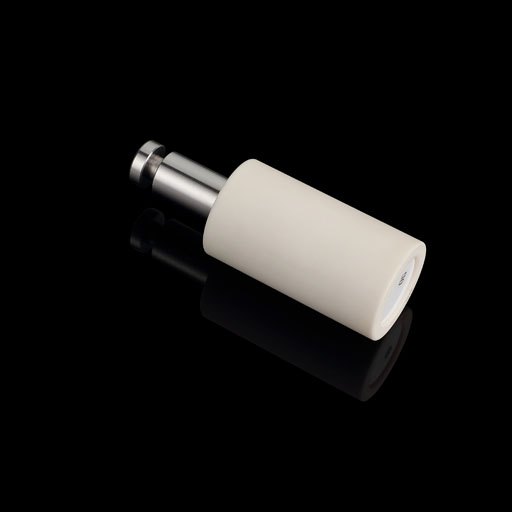
A ceramic pumping body may be joined to a stainless steel drive connection. The interface must withstand reciprocating load while avoiding point stress in the ceramic. Alignment and coupling design are as important as the ceramic material.
Cleaning and Changeover
Define flushing fluid, cleaning time, disassembly frequency and allowable residue. Accessible flow paths and compatible seals reduce downtime. If slurry cures on exposure to air, shutdown and flushing procedures should be included in the design review.
Battery Slurry Pump RFQ Checklist
- Slurry formulation, viscosity range and solids content
- Particle size and abrasive characteristics
- Dose per cycle, speed, pressure and repeatability
- Port layout, tubing and inlet conditions
- Cleaning chemistry and changeover procedure
- Drawings, prototype quantity and annual demand
View custom ceramic metering-pump components and the ceramic metering-pump RFQ guide. Send your slurry and dosing data for a manufacturability review.